Portage County Auditor serves as the chief fiscal officer and official property valuation authority for Portage County, Ohio. The Portage County Auditor manages real estate assessments, maintains parcel records, and oversees county financial operations with a strong focus on transparency and accountability. This office determines taxable property values based on Ohio law and market data, helping schools, cities, and townships receive fair funding. It tracks public funds, prepares financial statements, and supports responsible budget management across county departments. Residents rely on accurate property cards, ownership details, tax district information, and appraisal updates provided by the Portage County Auditor. By maintaining clear records and open reporting, the office strengthens trust between local government and taxpayers throughout the county.
Property Records Search
Portage County Auditor plays a central role in protecting taxpayer interests and maintaining organized public finances across Portage County. The Portage County Auditor reviews property transfers, updates assessed values, distributes tax revenue, and balances county accounts with strict adherence to Ohio fiscal standards. As the county fiscal officer, this office processes payroll, issues vendor payments, and maintains detailed accounting records for public review. It works alongside the county treasurer and recorder while maintaining distinct responsibilities that support checks and balances. Property owners depend on reliable valuation data and transparent tax calculations issued by the Portage County Auditor. Through consistent reporting, accurate assessment practices, and public record maintenance, the office upholds financial integrity and promotes confidence in county government operations.

About the Portage County Auditor’s Office
The Portage County Auditor’s Office serves as the financial control center for county government. It maintains property data, safeguards public funds, and keeps detailed financial records for public review. This office supports local schools, townships, cities, and county departments through accurate reporting and responsible oversight. As a public office serving Portage County, it follows strict state laws and accounting standards. Its work supports government accountability, accurate budgeting, and transparent public expenditure tracking. Residents depend on the office for reliable county financial records and clear property valuation data. The auditor’s office works daily to balance fiscal responsibility with public service. It keeps systems organized, records updated, and financial statements available for review.
Role as County Fiscal Officer
The Portage County Auditor acts as the county fiscal officer, which means it manages the financial framework of county government. This responsibility covers budget oversight, payroll operations, contract monitoring, and detailed financial reporting. The office maintains structured accounting systems that track every public dollar from collection to distribution. Through strong internal controls, it supports government accountability and protects county financial records from error or misuse.
Budget Oversight
The auditor monitors the county’s annual budget and verifies that departments stay within approved spending limits. Each fund must follow legal spending rules. The office tracks revenue from property taxes, fees, and state allocations before distributing funds to the proper agencies. Budget oversight helps prevent overspending and supports long-term financial stability. Clear oversight builds trust and strengthens government accountability. The auditor reviews appropriation requests and confirms that funds are available before expenses are approved. Regular audits and internal checks help maintain accurate public expenditure tracking throughout the fiscal year.
Financial Reporting
The auditor prepares official financial statements that summarize county income and expenditures. These reports document how tax dollars move through the system. These records allow residents to review county financial records and evaluate spending patterns. The office files required reports with state agencies and maintains compliance with standardized accounting principles. Clear reporting improves transparency and allows the public to monitor how local funds support services and infrastructure.
Key financial documents may include:
- Annual Comprehensive Financial Report
- Monthly revenue summaries
- Fund balance statements
- Public expenditure tracking reports
Payroll Administration
Accurate payroll administration protects both employees and taxpayers. It confirms that public funds are distributed correctly and recorded properly. The auditor processes payroll for county employees. The office maintains secure payroll systems that record compensation data and tax withholdings. Careful verification procedures reduce errors and support reliable county financial records.
This task includes:
- Verifying time records
- Calculating wages and deductions
- Issuing paychecks
- Managing benefits reporting
County Contracts
The office reviews and tracks county contracts before payments are issued. Each contract must meet legal and budget requirements. By maintaining oversight of agreements and vendor payments, the auditor protects public funds from misuse. Strong contract monitoring supports transparent spending and reliable fiscal control. The auditor confirms that contract terms match approved budget amounts before authorizing disbursements. Detailed documentation creates a clear record of obligations and strengthens long-term financial accountability.
Legal Authority Under Ohio Law
The Portage County Auditor operates under authority granted by the State of Ohio. State statutes define the auditor’s duties related to property assessment, financial reporting, and tax distribution. The office follows standards issued by the Ohio Department of Taxation, which regulates property assessment procedures and ensures uniform valuation practices across counties. These state rules require counties to conduct regular property reappraisals and maintain fair assessment ratios. Ohio law also designates the county auditor as the official fiscal officer. This designation grants authority to certify tax rates, distribute tax settlements, and maintain accurate accounting systems. By operating within this legal structure, the Portage County Auditor maintains compliance with state requirements and protects the integrity of local government finances.
Portage County Property Search
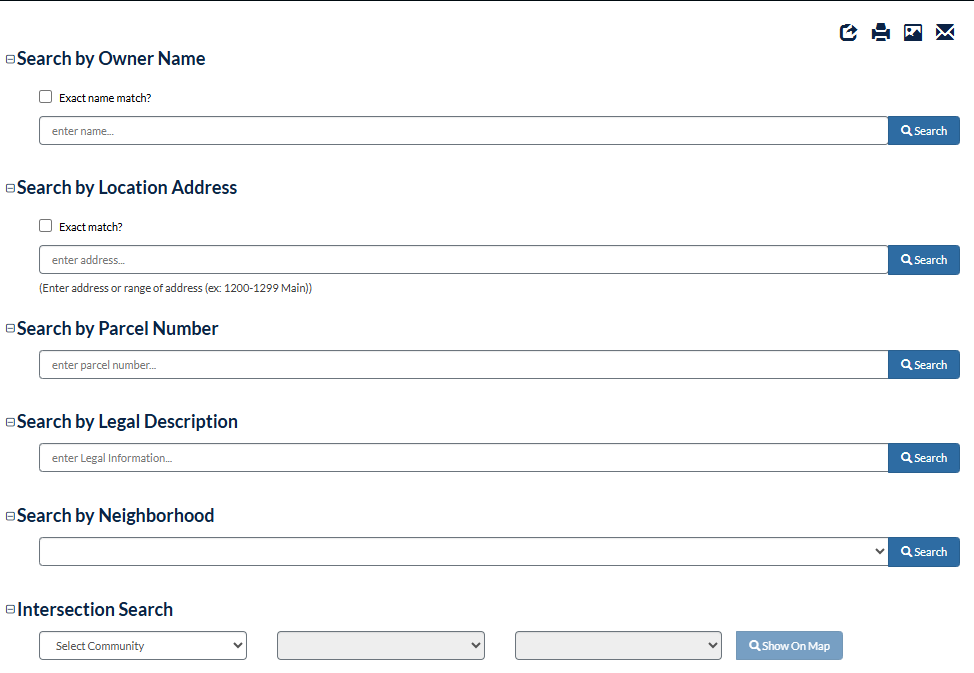
Residents can complete a property search Portage County Ohio through the official Portage County public records system. The Portage County public records office provides online parcel lookup tools that allow users to search by parcel number, owner name, or property address. This website connects users directly to the auditor’s property database, GIS parcel maps, valuation records, and tax data for properties located in Portage County.
Official website URL: https://www.portagecountyauditor.org
Visit the Official Website
- Open your web browser.
- Type the official URL: https://www.portagecountyauditor.org
- From the homepage, locate the Property Search or Parcel Search section.
- Click on the link to open the search portal.
Choose Your Search Method
You will now see the main property search dashboard. The tool offers three primary search options:
- Parcel Number Quick Finder: Use this method if you already have the parcel number.
- Locate the Parcel Number Search field.
- Enter the full parcel identification number exactly as shown on tax documents.
- Avoid adding extra spaces or symbols unless required.
- Click Search.
- Owner Name Search: Use this method to find properties owned by a person or business.
- Select the Owner Name Search tab.
- Enter the last name first.
- Add the first name to narrow results if needed.
- Click Search.
- Address Lookup: Use this method if you know the property’s street address.
- Click the Address Search option.
- Enter the street number.
- Enter the street name without abbreviations if possible.
- Click Search.
Review Property Record Details
After selecting a parcel, the tool will display a full property profile. The following information is typically available:
Ownership Information
- Current owner name
- Mailing address
- Ownership transfer dates
- Prior ownership history
Sales Data
- Most recent sale price
- Previous sale prices
- Transfer dates
- Conveyance type
Tax Information
- Current assessed value
- Land value and building value breakdown
- Annual property taxes
- Special assessments
- Payment status
Property Characteristics
- Parcel number
- Legal description
- Lot size or acreage
- Square footage
- Year built
- Building type
- School district
- Tax district
Use GIS & Mapping Features
This shows land use designations such as residential, commercial, agricultural, or industrial. Zoning information helps property owners confirm permitted land use. The system connects directly to GIS mapping tools.
How to View Parcel Maps
- Click the Map or GIS View button within the property record.
- The interactive map will open.
- Zoom in or out using the controls.
- Click on neighboring parcels to compare properties.
Map features may include:
- Parcel boundary lines
- Street view layout
- Aerial imagery
- Measurement tools
How to View Zoning Overlays
- In the GIS interface, open the Layers or Overlays menu.
- Select Zoning Layer.
- Turn the zoning overlay on.
Print or Download Records
Look for buttons labeled Print, Export, or Download on the record page. Most property search portals allow users to:
- Print property summary reports
- Save PDF copies
- Screenshot parcel maps
- Export limited data for research
Property Valuation & Real Estate Assessment
Property valuation in Portage County determines how much real estate owners pay in local taxes each year. The county auditor serves as the official property valuation authority, applying state standards to estimate fair market value and calculate assessed value for taxation. This system supports stable funding for schools, public safety, and infrastructure across Portage County. Accurate assessments promote equal treatment across neighborhoods and property classes. The office maintains structured data systems to support real estate oversight and long-term fiscal planning. In Ohio, the county auditor performs duties similar to a tax assessor office in other states. State statutes define how property is appraised, assessed, and updated during each appraisal cycle Ohio requires.
How Property Is Valued in Portage County
Property valuation follows uniform standards established under Ohio law. The auditor studies market evidence and applies mass appraisal techniques to evaluate thousands of parcels efficiently and fairly. County appraisers analyze property characteristics, recent transfers, and neighborhood trends. They compare similar homes, review commercial property income data, and verify construction details. This process promotes fairness and prevents wide variations between similar properties. The valuation system relies on professional appraisal principles. Each step supports equal taxation and transparent reporting.
Market Value Process
Market value reflects the amount a willing buyer would pay a willing seller in an open market. The auditor studies verified sales and removes non-arm’s-length transactions from analysis. Sales ratio studies help confirm that assessed values align with real market behavior. If the ratio falls outside state standards, adjustments may occur. Market value estimates aim to represent overall market patterns, not emotional or unique sale prices.
Appraisers examine:
- Comparable property sales
- Location and neighborhood influence
- Lot size and land use classification
- Building age and condition
- Renovations and improvements
- Economic trends affecting real estate
Reappraisal Cycle
Ohio law requires a full reappraisal every six years. This sexennial reappraisal updates every parcel’s value to reflect current market conditions. During this cycle, appraisers may conduct field inspections, review aerial imagery, and verify property data. Updated measurements, new construction, and demolitions are recorded during this period. The reappraisal cycle supports long-term accuracy. It corrects outdated data and adjusts values after major market shifts. Equalization across communities strengthens fairness and public confidence.
Triennial Updates
Between six-year reappraisals, the auditor conducts triennial updates every three years. These updates rely heavily on recent sales data rather than full physical inspections. Triennial adjustments help prevent large tax swings. They smooth market fluctuations and keep assessed values aligned with current trends. This structured appraisal cycle Ohio counties follow reduces assessment gaps and maintains stable real estate oversight across tax districts.
Understanding Property Tax Calculations
Property tax calculations follow a clear formula based on assessed value and millage rates. Once the market value is determined, the assessed value becomes the taxable portion. The auditor certifies assessed values and calculates tax distributions. These figures directly impact school funding, municipal services, and emergency response budgets. Property tax statements reflect combined rates from several taxing authorities within each district.
Assessed Value vs Market Value
Market value represents estimated sale price under normal conditions. Assessed value equals 35% of that market value under Ohio law. The assessed value creates consistency across all Ohio counties. This uniform percentage supports equal taxation statewide. Tax credits, homestead exemptions, and rollback reductions may lower the final tax bill for qualifying property owners.
Example calculation:
| Market Value | Assessed Value (35%) |
|---|---|
| $250,000 | $87,500 |
| $400,000 | $140,000 |
Millage Rates
A mill represents $1 of tax per $1,000 of assessed value. Each tax district applies combined millage rates based on voter-approved levies and operational needs. Higher millage rates increase total tax bills. Lower rates reduce annual property tax obligations. The auditor certifies millage rates annually and applies them to assessed values for calculation accuracy.
Millage rates fund:
- Local school districts
- County government
- Cities and townships
- Fire and emergency services
- Libraries and park systems
Tax Distribution
After collection by the county treasurer, tax revenue is distributed to the appropriate taxing authorities. The auditor calculates each entity’s share using certified millage rates. Transparent tax distribution reporting supports public accountability. Residents can review allocation summaries to see how local funds support community services.
Distribution categories often include:
- Public education funding
- Law enforcement services
- Road and bridge maintenance
- Public health programs
- Township administration
Real Estate Oversight & Appeals Process
Real estate oversight protects property owners from unequal treatment. The auditor maintains valuation records and reviews data for accuracy during each appraisal cycle Ohio requires. Property owners may file a complaint with the Board of Revision if they believe a value is incorrect. Evidence such as comparable sales, repair estimates, or independent appraisals may support the claim. The appeal process creates balance in the system. It allows taxpayers to challenge errors and request corrections based on documented proof.
Why Accurate Property Valuation is important?
Accurate valuation affects housing affordability, business costs, and school funding levels. Balanced assessments protect taxpayers and maintain stable revenue for public services. When assessments reflect true market value, communities benefit from predictable funding and fair taxation. The Portage County property valuation authority follows structured procedures, state regulations, and professional appraisal standards to maintain reliability and public trust.
Property Tax Programs & Exemptions
Property tax programs in Portage County provide structured relief for qualifying homeowners. These programs reduce taxable value or apply credits that lower annual tax bills under state law. The Portage County Auditor administers these exemptions under authority granted by the State of Ohio. Program rules, eligibility standards, and income thresholds are established by the Ohio Department of Taxation. Residents seeking property tax relief Portage County options must apply and meet specific qualifications. Once approved, the reduction applies to future tax calculations and may continue if eligibility remains unchanged.
Homestead Exemption
The homestead exemption Ohio program reduces the taxable value of a qualifying homeowner’s primary residence. This program primarily supports seniors and permanently disabled residents through direct assessed value reductions. Most new applicants must meet income limits set by the state. The exemption reduces assessed value by a fixed statutory amount, which lowers the total tax calculation. Since Ohio assesses property at 35% of market value, this reduction directly decreases the taxable base.
Eligible applicants may include:
- Homeowners age 65 or older
- Permanently and totally disabled residents
- Surviving spouses who meet state requirements
Owner-Occupancy Credit
The Owner-Occupancy Credit offers a percentage-based reduction for homeowners who live in their primary residence. This credit supports long-term residency and homeownership stability. The credit typically reduces property taxes by 2.5% of the qualified amount. Unlike the homestead exemption Ohio program, this credit does not require income verification. Once approved, the credit usually renews automatically unless ownership or residency changes.
To qualify, applicants must meet the following requirements:
- The property must be the owner’s principal residence as of January 1
- The owner must file an application with the county auditor
CAUV Program
The Current Agricultural Use Value (CAUV) program allows farmland to be taxed based on agricultural production value instead of development market value. This program protects active farmland from higher residential or commercial tax assessments. The CAUV valuation method lowers assessed values for qualifying farmland, reducing annual property tax obligations. Landowners must maintain continuous agricultural use to remain eligible. If the land converts to residential or commercial development, recoupment charges recover prior tax savings under state rules.
Land must meet specific conditions to qualify:
- Devoted exclusively to commercial agricultural use
- Meet minimum acreage or income production standards
- Approved through an official CAUV application
Disabled Veteran Exemptions
Ohio law provides enhanced property tax relief for veterans with qualifying service-connected disabilities. This program builds upon the homestead exemption Ohio framework and offers greater reductions for eligible veterans. Qualified disabled veterans may receive a greater assessed value reduction than the standard homestead exemption, lowering annual property taxes. Surviving spouses may continue benefits if residency requirements are met. Applicants must provide U.S. Department of Veterans Affairs disability verification to receive this property tax relief.
Eligibility criteria may include:
- Honorable discharge from military service
- Verified service-connected disability rating meeting state thresholds
- Ownership and occupancy of the home as a primary residence
Financial Records & Government Transparency
Financial transparency strengthens public confidence in county government. The Portage County Auditor maintains detailed county financial records and publishes reports that show how public funds are collected, allocated, and spent. Residents of Portage County can review official reports to monitor spending trends and revenue sources. Open reporting supports government accountability and gives taxpayers a clear view of how local services are funded. The auditor’s office tracks public expenditure data, verifies fund balances, and certifies distributions to schools, municipalities, and townships. Clear documentation allows the public to examine how financial decisions impact the community.
Accessing County Financial Reports
The Portage County Auditor provides public access to official financial documents through its online financial transparency portal. These records show how tax revenue and other income support county operations across Portage County.
Official financial reports website at: https://www.portagecountyauditor.org
Residents may view reports online or submit a formal public records request if additional documentation is needed. Reports are organized by fiscal year, fund type, and reporting category to simplify review.
Commonly available reports include:
- Annual Financial Statements
- Budget Reports
- Expenditure Records
Annual financial statements present revenue, expenses, assets, liabilities, and fund balances for the fiscal year, offering a clear view of county finances. Budget and expenditure reports show how funds are allocated and spent, tracking payroll, vendor payments, and capital projects to support transparency and government accountability.
Public Accountability & Audits
Public accountability depends on independent oversight and internal financial controls. The Portage County Auditor maintains accounting systems that follow state standards and reporting requirements. The office works in coordination with the Ohio Auditor of State, which conducts independent audits of county finances. These audits review compliance with state law, confirm accurate reporting, and evaluate internal controls. Audit findings, management letters, and corrective action plans are part of the public record. This process strengthens transparency and reinforces trust in county financial management. Through structured reporting, independent review, and open public access to financial data, the county maintains responsible stewardship of taxpayer funds.
Licenses Issued by the Portage County Auditor
The Portage County Auditor issues specific licenses required under Ohio law, including vendor licenses and dog licenses. These licenses support legal business activity and responsible pet ownership across Portage County. License services connect residents and business owners with proper registration processes. By managing these records, the auditor supports compliance, revenue tracking, and public safety standards within the county.
Vendor Licenses
The auditor issues vendor license Ohio registrations for businesses that sell taxable goods or services. Any individual or company conducting retail sales within the county must obtain the proper license before operating. Vendor licensing ensures businesses collect and remit state sales tax correctly. It also creates an official business registration county record for compliance monitoring.
There are two primary types of vendor licenses issued by the auditor:
- Retail Vendor License
- Transient Vendor License
Retail Vendor License
A Retail Vendor License applies to businesses operating from a fixed location within Portage County. This includes storefronts, offices, and other permanent commercial spaces. Once approved, the business receives a vendor number for tax reporting purposes. This number must appear on sales tax filings submitted to the State of Ohio. Retail vendor licenses remain active as long as the business operates and complies with tax rules.
Applicants must:
- Complete the vendor license application
- Provide business entity details
- Pay the required state licensing fee
Transient Vendor License
A Transient Vendor License applies to businesses that operate in multiple counties without a fixed storefront. Examples include mobile sellers, trade show vendors, and temporary market operators. Applicants must register through the auditor’s office before conducting taxable sales. This license allows businesses to collect sales tax across different Ohio counties under a single registration. Accurate vendor registration protects consumers and maintains consistent tax reporting standards statewide.
Dog Licenses
The Portage County Auditor issues dog licenses for all dogs three months of age or older. Ohio law requires annual registration to support animal control services and community safety programs across Portage County. The dog license Portage County process helps identify lost pets quickly and confirm rabies vaccination compliance. License records allow animal control officers to return stray dogs to their rightful owners faster. Registration fees help fund shelter operations, enforcement efforts, and public health initiatives. Maintaining accurate licensing data improves response time during animal-related incidents.
Annual Registration
Dog owners must register pets annually during the designated licensing period established under Ohio law. Timely renewal prevents penalties and keeps county records current. Registration can usually be completed online, by mail, or in person through the auditor’s office. After registration, the owner receives a uniquely numbered dog tag that must be worn at all times under Ohio law. The number connects to the owner’s contact details in county records. Multi-year or permanent licenses may be available with qualifying rabies documentation and a one-time fee.
Registration typically requires:
- Owner contact information
- Dog description and breed
- Proof of current rabies vaccination
- Payment of the annual license fee
Late Penalties
Failure to register a dog within the required timeframe may result in late penalties. Additional fees apply after the annual deadline passes, increasing the total registration cost. Late penalties encourage compliance with state law and promote responsible ownership. Delayed registration may also increase the risk of enforcement action during routine checks. Registering on time avoids extra charges, supports animal safety programs, and helps maintain accurate county licensing records year after year.
Location & Office Information
The Portage County Auditor serves residents across Portage County and operates from the county seat in Ravenna. Residents searching for the Portage County Auditor office address or an auditor near Ravenna Ohio can find full contact details below. This Portage County government office provides in-person assistance for property records, tax programs, vendor licenses, and financial documentation requests. Residents may visit the office for property valuation questions, homestead exemption applications, CAUV filings, vendor licenses, and dog license services. Calling ahead can help confirm document requirements or appointment availability.
Office Location
Portage County Auditor
Serves residents of Portage County
Physical Address:
449 South Meridian Street
Ravenna, Ohio 44266
Office Hours:
Monday – Friday: 8:00 AM – 4:30 PM
Closed on federal and state holidays
Phone Number:
(330) 297-3561
Email:
auditor@portageco.com
Official Website:
https://www.portagecountyauditor.org
Nearby Government Offices
Several related county offices operate close to the auditor’s location in Ravenna. These offices handle separate responsibilities within county administration. All offices are located within or near the Portage County Administration Building complex in Ravenna, making it convenient for residents to complete multiple government-related tasks in one visit.
- Portage County Treasurer
Handles property tax collection, payment processing, and delinquent tax matters. - Portage County Recorder
Maintains official land records, deeds, mortgages, and plats. - Portage County Board of Commissioners
Oversees county administration, budgets, and public policy decisions.
Frequently Asked Questions
The Portage County Auditor provides essential services related to property valuation, tax assessment, licensing, and county financial oversight in Portage County. Many residents have questions about property searches, tax calculations, exemptions, and official records. Below are clearly structured FAQs designed for quick answers, featured snippets, and schema markup integration. Each response provides detailed information to help property owners, taxpayers, and businesses understand how the auditor’s office operates and what services are available.
What does the Portage County Auditor do?
The Portage County Auditor serves as the chief fiscal officer and property valuation authority for the county. The office is responsible for determining the market value of all real estate parcels, maintaining ownership records, and ensuring property information remains accurate and updated. It calculates assessed values used to determine property taxes but does not collect those taxes directly. The auditor also issues vendor licenses and dog licenses, maintains GIS parcel mapping systems, and prepares official financial reports showing how county funds are managed. In addition, the office certifies tax rates for various districts such as schools, municipalities, and townships. By maintaining transparent financial and property records, the auditor ensures fairness, accountability, and compliance with Ohio state laws governing taxation and public finance.
How can I search property records in Portage County?
Property records in Portage County can be searched online through the official auditor website using the parcel search tool. Users may search by owner name, parcel number, or property address to access ownership history, assessed value, tax district, land details, and building information. The online database also provides access to GIS mapping features that visually display parcel boundaries and nearby properties. If online access is unavailable, residents can visit the auditor’s office in person to request assistance from staff members. Property record searches are commonly used during home purchases, refinancing, legal matters, and tax review processes. Keeping property information accessible ensures transparency and allows residents to verify details related to assessments, exemptions, and property classification.
How is property tax calculated in Portage County?
Property tax in Portage County is calculated using a standardized formula required by Ohio law. First, the county auditor determines the fair market value of the property. Then, 35% of that value becomes the assessed value for tax purposes. This assessed value is multiplied by the local millage rate, which varies depending on the tax district and voter-approved levies for schools, townships, and municipalities. The total calculation determines the annual property tax obligation. While the auditor determines value and certifies rates, the county treasurer is responsible for collecting payments. Property owners receive tax bills based on this calculation, typically paid in semiannual installments. Understanding this formula helps residents estimate future tax obligations and review assessment accuracy.
How do I apply for a homestead exemption?
The homestead exemption program provides property tax relief to qualifying senior citizens and individuals with disabilities. To apply, the homeowner must file an application with the Portage County Auditor and provide documentation verifying eligibility requirements such as age, disability status, and income thresholds when applicable. The property must be the applicant’s primary residence as of January 1 of the tax year. Once approved, the exemption reduces the taxable value of the home, lowering the total property tax owed. Applications typically have annual deadlines, and supporting documents must be accurate and complete. If eligibility continues, the benefit may automatically renew in subsequent years. This program helps reduce financial burden for eligible homeowners across the county.
Is the county auditor responsible for collecting property taxes?
No, the county auditor does not collect property tax payments. The auditor’s role is to determine property values, calculate assessed values, and certify tax rates for each district within the county. Once taxes are calculated, the certified tax duplicate is forwarded to the county treasurer, who is responsible for billing and collecting payments from property owners. The separation of duties ensures accountability and financial oversight within county government operations. If you have questions about payment deadlines, delinquent taxes, or installment plans, you should contact the county treasurer’s office. However, if your concern relates to property valuation or assessment accuracy, the auditor’s office is the correct department to contact for review or appeals.